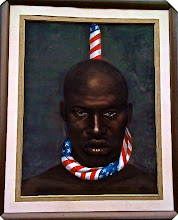
I wonder: what have I done to make you see me as an enemy of my own prosperity? What would it take for you to recognize that I am, in fact, your brother?
Each day, I wake with gratitude, acknowledging the Creator and the breath of life. Yet, when you pass by, silent and distant, I still hear an unspoken cry—a voice calling out to me. It echoes in the streets where young boys, far too young, could instruct me in the workings of weapons. It trembles in the hollow spaces of abandoned playgrounds and shuttered schools, where innocence once thrived but now lingers as shadows of what could have been. Life carries on, yes—but I ask myself, what kind of life is this?
By the age of nine, a little Black boy may already know the origins of drugs in his community. By ten, he will likely have seen his first automatic weapon. And while it might seem easier to turn away, to feel nothing, I can’t. I am human. And this—this—isn’t what Malcolm envisioned when he gave his life to the struggle. It isn’t what Martin stood on the front lines for. This isn’t what generations of our ancestors dreamed as they slipped into the night, risking everything to carve a better tomorrow from the jagged stones of their reality. Their sacrifices demand more from us. Our very lives bear witness to their hope—to the possibility that today would be better, brighter.
But instead of honoring that hope together, we’ve been conditioned to see one another as competitors in a game rigged against us from the start. We are taught to measure success in isolation, to celebrate the climb of one while ignoring the falls of many. When did we forget that there is more power in joining hands than in pointing fingers? When did we trade collaboration—the essence of our survival—for competition?
Once upon a time, we built together. Neighbors pooled their resources—not just money, but time, wisdom, and care. When one family struggled, another stepped in with a hot meal or a watchful eye over the children. Communities didn’t just exist; they thrived because people understood that their fates were tied. Success wasn’t singular; it was collective. If one fell, we all fell. And so, we rose together.
Now, we hesitate to share even the smallest bit of knowledge, worried that helping another might somehow diminish our own worth. We hoard opportunities as if they are finite. But our survival demands that we see beyond this illusion. Imagine what we could accomplish if we saw ourselves not as rivals but as partners. What if we reclaimed the spirit of the block, the village, the kinship that once made us unbreakable?
Community is not a competition; it is a commitment—a pact to uplift one another, to amplify each voice, to ensure no one is left behind. It means creating spaces where mentorship flows freely, where the wisdom of elders meets the energy of youth. It means recognizing that the potential of one child is tied to the opportunities afforded to every child. It means building schools, not prisons; opening doors, not closing them.
Albert Einstein once said that the world’s danger doesn’t lie in those who do evil, but in those who do nothing to stop it. Violence isn’t always physical—it is injury by distortion, by infringement, by the profanation of something sacred. Gandhi once called poverty the worst form of violence. And I wonder: how long will we perpetuate this cycle of harm? To neglect our brothers and sisters in their suffering is to distort our shared humanity. It is an affront to the divine thread that connects us.
There was a time when the trials of one stirred the hearts of many. When a neighbor’s plight was cause enough to rally, to stand shoulder to shoulder against injustice. But that time feels distant now, lost in the noise of our disconnection. Yet I believe we can reclaim it. The time for silent tears and passive sorrow has passed.
If we are to stand, let us rise to our full height—undaunted, unbowed. Let us speak with conviction, from the abundance of our hearts. Let us create a freedom that is whole and unbroken, a freedom untethered from violence.
Because we owe this—not only to our pasts and futures,
We owe THIS to our very selves.

No comments:
Post a Comment